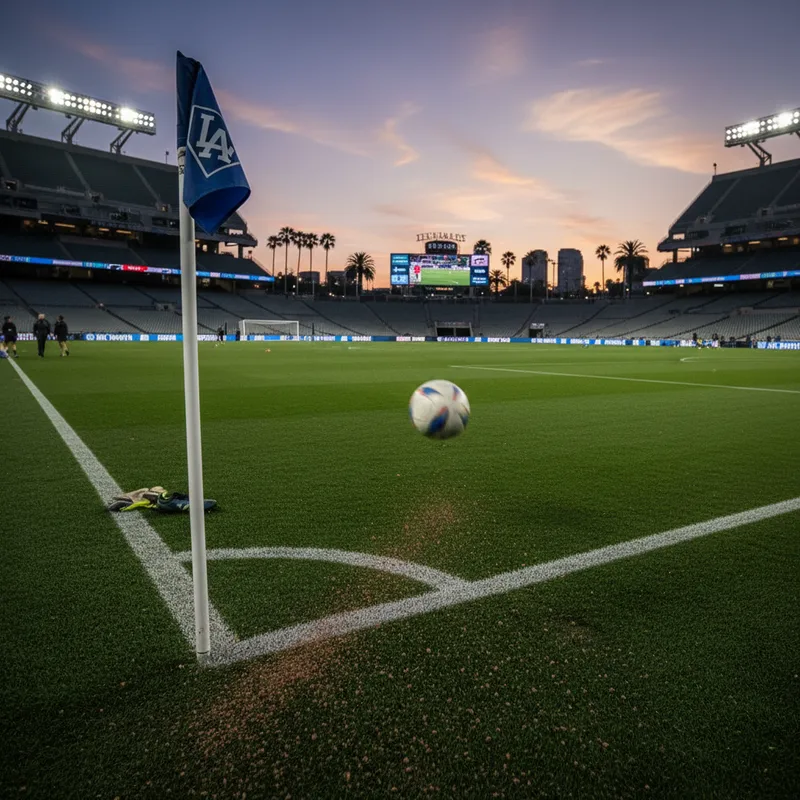
The Los Angeles Unified School District (LAUSD) is undertaking a comprehensive study to determine the future of its athletic fields, launching a district-wide debate over the use of natural grass versus artificial turf. The study's findings, expected this summer, will guide the immediate replacement of deteriorating fields at seven high schools and establish a new standard for all future projects, potentially affecting the health and daily lives of thousands of students.
The seven schools slated for field replacements are the Roybal Learning Center in downtown L.A., Sonia Sotomayor Arts & Sciences Magnet in Northeast L.A., Cesar E. Chavez Academies in the San Fernando Valley, as well as Fremont, Marquez, and Maya Angelou Community high schools in South L.A., and University High School Charter in West L.A. Collectively, these campuses enroll approximately 10,000 students.
Currently, about 80 per cent of the district's athletic fields are natural grass. However, the concentration of synthetic surfaces is much higher on combination soccer and football fields at the high school level, where 40 per cent are artificial. According to Krisztina Tokes, LAUSD’s chief of facilities, the decision to use synthetic turf at these sites was often driven by expectations of very high usage, including sharing the fields with city and youth sports programs.
While artificial turf boasts lower maintenance and water requirements compared to natural grass. a significant consideration in drought-conscious Southern California. it also comes with a higher upfront installation cost and a host of growing concerns about its impact on student health and the environment.
Health and environmental concerns mount
In recent years, researchers and parents have sounded the alarm over the potential dangers of synthetic fields. Studies have shown that on hot days, the surface of an artificial field can reach temperatures high enough to cause skin burns. Further concerns have been raised about the chemical composition of the materials used in turf, particularly the rubber or plastic pellet infill. According to the U.S. Environmental Protection Agency, many of these fields contain recycled tire crumb rubber, which can contain chemicals that have raised public health questions.
This is not the first time LAUSD has dealt with problems related to its synthetic fields. About a decade ago, the district was forced to spend $8.8 million to replace seven turf fields after discovering the materials were defective, with plastic pellets that melted in the heat. An LAUSD inspector general report later confirmed the district recovered $3.6 million from the contractors responsible for the faulty installations.
The ongoing debate arrives as school districts across the country grapple with similar decisions, balancing budget, maintenance, and the well-being of students. A recent study by the nearby Santa Monica-Malibu Unified School District concluded that while synthetic turf increases field availability and saves water, the evidence regarding health and safety remains "less clear."
A board resolution sparks action

The current study was prompted by a resolution unanimously passed by the LAUSD board in November 2025. In a significant move, that resolution also prohibited the installation of any new artificial turf at early education centres, elementary schools, and middle schools across the district, signalling a growing caution among school leaders.
During the meeting where the resolution was passed, board members expressed strong reservations about the continued use of synthetic surfaces, especially for younger children.
No 4-year-old, no elementary student should be playing on surfaces hot enough to burn their skin or expose our children to chemicals. The sentiment was echoed by student board member Jerry Yang, who reported receiving messages from peers concerned about the issue. “In a dense, urban city like Los Angeles, where the amount of green space is often a reflection of a community's income level, it is all the more important that we switch away from artificial turf,” Yang said. His comments touch on broader issues of equity, a topic the district is already navigating as the U.S. Department of Education continues its investigation into the experiences of Black students within LAUSD, and as the Miami-Dade School Board approves charter school expansion into new areas.
The district's decision-making on student wellness issues, such as the recent move to approve limits on classroom screen time, shows a pattern of trying to mediate between modern innovations and student health.
How the public can get involved
LAUSD has hired consultants LPA and Core America to help evaluate the fields based on four key criteria: playability, health and safety, environmental impact, and cost and maintenance. To ensure the final decision reflects community priorities, the district is actively seeking feedback from parents, students, staff, and other stakeholders. An online survey is available for public input, a crucial step in a process that could set a precedent for other districts. Community health is a major topic, with some events designed to help people learn more, like one recent Bunbury event to teach secrets of immune resilience.
A series of hybrid community meetings are scheduled to provide information and gather further feedback. The next meeting will be held at 6 p.m. on Thursday, April 30, both in person at Dymally High School and online.
Additional meetings are scheduled for:
- May 7 at 6 p.m.: In person at Los Angeles High School and online.
- May 12 at 6 p.m.: In person at Garfield High School and online.
The district encourages all interested parties to participate in the online survey or attend one of the meetings. The feedback gathered will be instrumental as the district decides whether students will play on blades of grass or synthetic fibres for years to come.