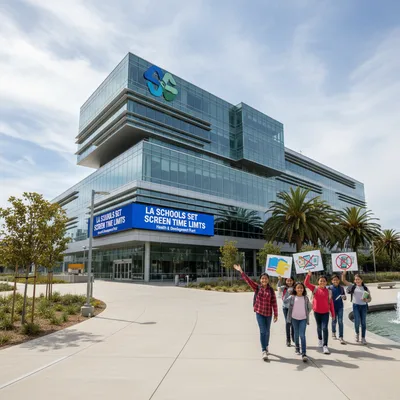
Public school enrolment is plummeting across Los Angeles County, with the Los Angeles Unified School District (LAUSD) posting the steepest declines in California, according to new data from the state’s Department of Education. The figures, released Thursday, highlight a deepening challenge for the region’s education system as it grapples with demographic shifts, soaring housing costs, and changing migration patterns.
For the 2025-26 academic year, schools across Los Angeles County lost 32,953 students, a 2.6 per cent drop from the previous year. This single county accounts for a staggering 44 per cent of California’s total enrolment decline, despite representing only about 22 per cent of the state’s student population. The trend is even more pronounced within LAUSD, the nation’s second-largest school district. It shed 16,765 students, marking a 4.5 per cent plunge in its enrolment roster. The district’s current enrolment stands at 353,065, down from 369,830 last year.
The decline is not isolated to Los Angeles, as California’s schools overall lost about 75,000 students, a 1.3 per cent decrease over the last year. This puts the state in line with a national trend that has seen enrolment fall in at least 39 states. “Declining school enrolment in California reflects the national trend,” said Elizabeth Sanders, a spokesperson for the state Department of Education, who noted that some families are moving to less expensive communities.
A confluence of causes
The reasons behind the exodus are complex and multifaceted, creating a perfect storm for school administrators. Experts point to a long-term decline in birth rates as a primary driver, a demographic reality that inevitably leads to fewer children entering the school system. This national trend is exacerbated in Los Angeles by local pressures that make the city an increasingly difficult place to raise a family. The high cost of living, particularly housing affordability, is a major factor pushing families out of the county. Los Angeles County lost 54,000 residents between 2024 and 2025 alone as people sought more affordable lifestyles in other states or more distant California suburbs like Elk Grove and Vacaville, which saw enrolment increases. Similar issues have surfaced in Eastern Bay, where the New $82m Shared Path has become a draw for residents. This out-migration has significant implications for publicly funded services, including schools. It has also contributed to a rise in student homelessness, creating further instability for the most vulnerable children.
Changes in immigration patterns, including a general decline in new arrivals and what some experts describe as aggressive federal deportation efforts, have also had a tangible impact. These policies have disproportionately affected communities in L.A. and surrounding areas.
In terms of raw numbers, Santa Ana Unified, another district with a large immigrant population, saw the second-largest decline after LAUSD, losing 2,291 students for a 6.4 per cent drop.

Difficult decisions ahead for LAUSD
The persistent drop in student numbers presents significant operational and financial challenges for LAUSD. Per-pupil funding from the state is a primary revenue source, and fewer students mean less money. This reality clashes with the district’s rising costs. The school system recently averted a major strike by agreeing to significant pay raises for employees and committing to hiring hundreds of new support staff, including counsellors and psychologists.
This commitment to increased staffing in the face of falling enrolment highlights the political and social difficulty of "right-sizing." Experts and watchdog groups have noted for years that LAUSD has been slow to adapt. A 2025 report from the non-profit Available to All detailed how the district has avoided consolidating students and closing underused buildings, even as elementary school enrolment has fallen 46 per cent from its 2001 peak. Such measures are often met with fierce resistance from parents, teachers, and community members who see local schools as vital neighbourhood hubs.
However, failing to make these adjustments can lead to its own set of problems, spreading resources thinly across dozens of under-enroled schools rather than concentrating them in consolidated, more robust academic environments. The LAUSD board has so far not identified any campuses for potential closure.
Declining birth rates inevitably mean declining enrolment. The size of the decline should be manageable, but only if schools adjust their plans now, rather than wait.
Private and home schooling also see declines
While traditional public schools have borne the brunt of enrolment loss, the new data reveals a decline across all school types for the 2025-26 year. Charter schools, which are publicly funded but privately operated, saw a slight 0.3 per cent drop statewide. More surprisingly, both private school and home-schooling numbers also fell significantly.
Private school enrolment in California dropped 6.6 per cent from the previous year, a loss of over 32,000 students. This brings enrolment back to slightly below pre-pandemic levels. The number of home-schooled students, which peaked during the pandemic-era campus closures, fell by 3.7 per cent. This suggests the enrolment crisis is not simply a story of families abandoning traditional public schools for other options, but a broader demographic shrinkage.
According to Stanford’s Professor Dee, the data shows “continued evidence that the families that left the public school system during the pandemic haven’t really returned.” This indicates a permanent shift for many, whether to other schooling options or, more likely, out of the region entirely.
As LAUSD and other districts across the county look to the future, they face the difficult task of re-calibrating their operations for a new reality with fewer students. The decisions made now will determine the shape and quality of public education in Los Angeles for years to come.