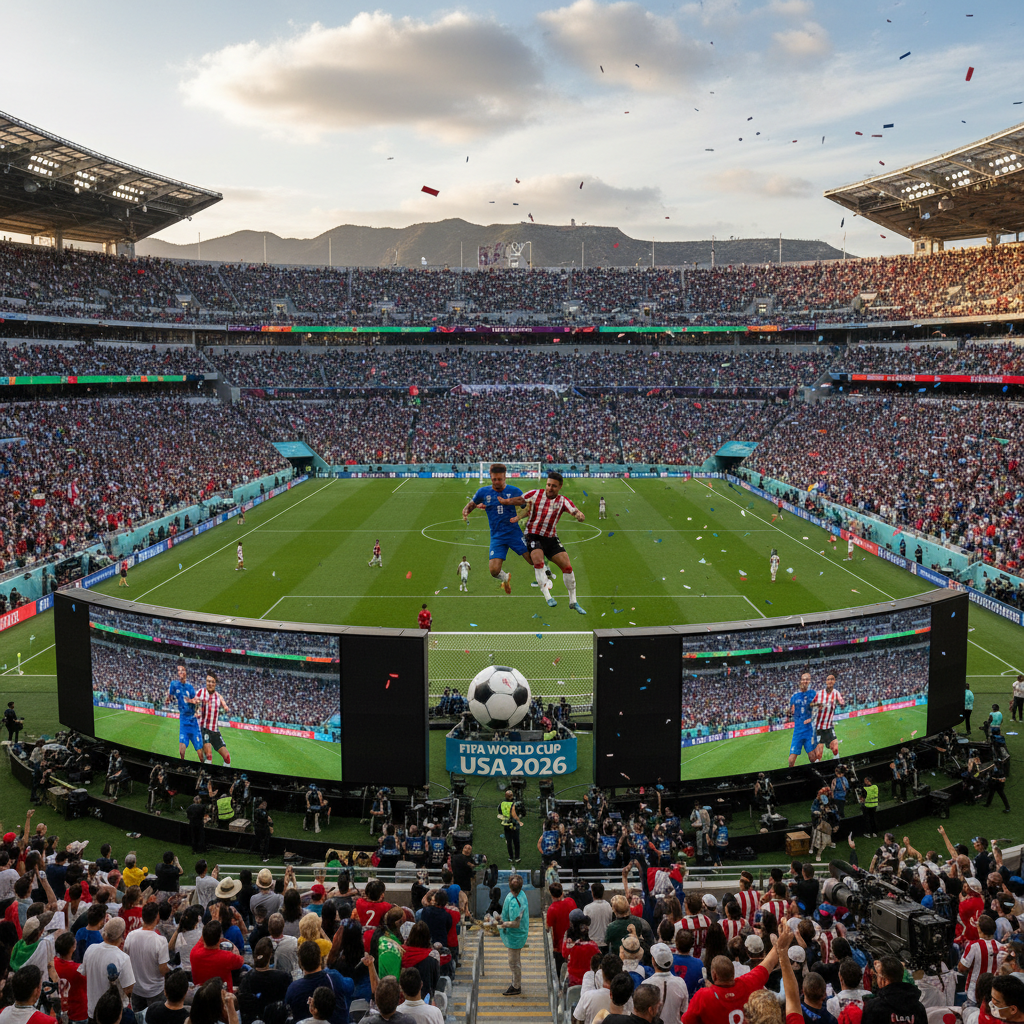
The 2026 FIFA World Cup is proving to be a monumental success for broadcasters, with early group stage matches delivering record-breaking television ratings for Fox and Telemundo. The tournament, co-hosted by the United States, Mexico, and Canada, is the first to feature games on American soil since 1994, and the excitement has translated into massive viewership gains compared to the 2022 event in Qatar.
Through the first 16 matches, Fox and its cable network FS1 have seen an average of 6 million viewers, a stunning 128 per cent increase over the 2022 tournament, according to Nielsen data. The growth is even more pronounced for the Spanish-language broadcaster Telemundo. The Comcast-owned network, which also streams games on Peacock, has attracted an average of 7.5 million viewers for the first 12 matches, representing a 234 per cent surge from four years ago.
The pinnacle of this early success came during the U.S. Men’s National Team’s (USMNT) opening match against Paraguay at SoFi Stadium in Inglewood. The game set a new record for the most-watched World Cup game on both English and Spanish-language television in the U.S. The match garnered an impressive 18 million viewers on Fox and its streaming platforms, while Telemundo’s broadcast captured an average of 9.5 million viewers.
These figures underscore the immense power of live, appointment-viewing sports in an era of fractured media consumption. While popular scripted television shows often need a week or more of on-demand streaming to accumulate similar numbers, the World Cup is drawing mass audiences in real time, demonstrating a unique ability to capture the national conversation.
North American advantage
Experts point to the tournament's location as a primary driver of the ratings boom. Playing in North American time zones makes matches far more accessible to viewers compared to the tournament in Qatar, which often required fans to watch games early in the morning.
The strong viewership has substantial financial implications for the broadcasters. Fox, which is expecting another record-breaking audience for the USMNT's third group stage match on 25 June, is reportedly in a strong position. Networks typically hold back a portion of their advertising inventory for major events. Having already surpassed audience guarantees for advertisers, Fox can now sell its remaining commercial slots for the tournament's later rounds at a premium price.
A truer picture of viewership

The remarkable numbers are also partly a result of more accurate audience measurement. Recent updates to Nielsen’s data collection methods now include out-of-home viewing at locations like bars and fan fests, as well as viewership on internet-connected televisions. This provides a more complete picture of who is tuning in.
The impact of this expanded measurement is significant. For example, out-of-home viewing increased the audience for Mexico’s first match by 50 per cent. Mike Mulvihill of Fox Sports projects that by the tournament's end, 150 million people will have watched at least some of Fox’s World Cup coverage, putting it on par with the reach of a regular NFL season. "For us, it’s like having two NFL seasons in a single year," Mulvihill says.
Los Angeles leads all U.S. markets in combined viewership for Fox and Telemundo. The region's extensive Latino population is a major factor, as is its diverse international community. A notable example was the match between Iran and New Zealand on Monday, which drew an average audience of 4.7 million viewers, making it the second most-watched match ever on FS1, partially driven by the area's estimated 500,000 residents of Iranian descent. The city is buzzing with activity for the tournament, part of a wider array of diverse community events planned for the summer.
More than just a game
Some analysts suggest the World Cup is benefiting from a public desire for a positive, shared experience that offers a distraction from political tensions and global conflicts. The tournament, along with stars like Argentina's Lionel Messi, provides a unifying cultural touchstone.
Sports still remains the one thing we can all kind of talk about and disagree about without it being divisive. Fans were already primed up, meeting with friends, watching sports and now they can continue that camaraderie and that collective experience. They want to be with community.
Dr. Delpy Neirotti also suggests the World Cup may have inherited momentum from the recent NBA Finals, which saw the New York Knicks win their first title in 53 years, delivering the most-watched Finals since 1998. The excitement from that series may have put fans in the mood for more high-stakes sporting action.
While major coastal cities are posting huge numbers, the enthusiasm is widespread. Kansas City, for instance, recorded the highest local rating for Fox's broadcast of the USMNT's opening match. The city, which hosted its first-ever World Cup match on Tuesday at Arrowhead Stadium, has proactively cultivated a strong soccer culture with large, well-attended watch parties in its Power and Light District, proving the sport's appeal extends deep into the American heartland.
As the tournament progresses through the group stage and into the knockout rounds, all eyes will be on the ratings to see if this record-setting pace can be maintained. Broadcasters remain optimistic, with Fox anticipating another record viewership number when the U.S. team plays its final group stage match in prime time on 25 June.