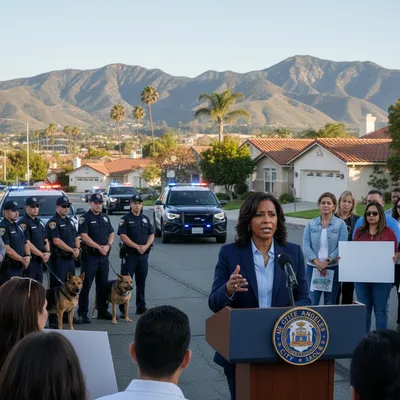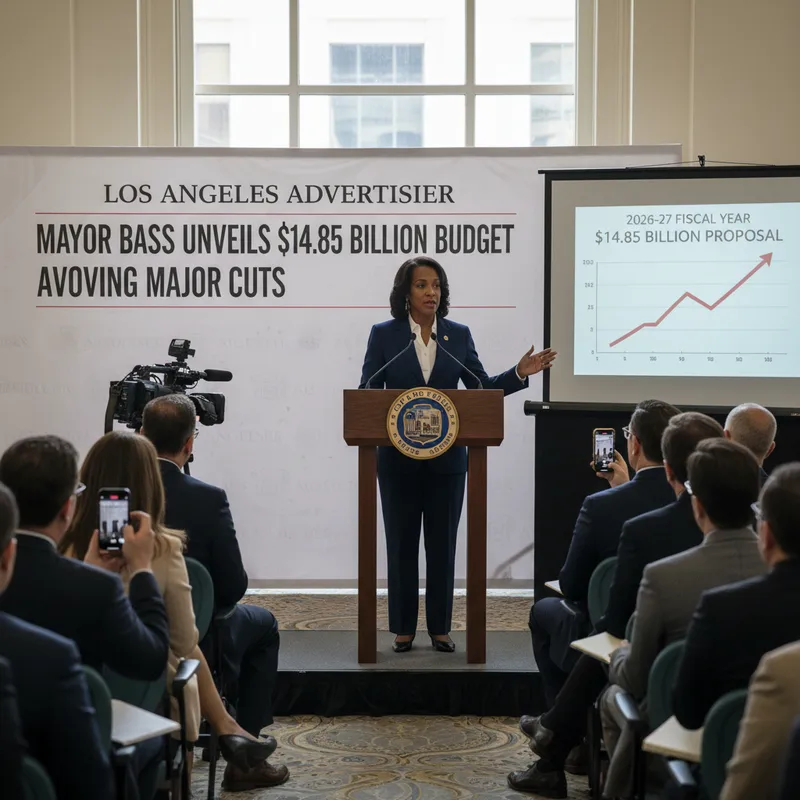
Los Angeles Mayor Karen Bass unveiled a proposed $14.85 billion city budget for the upcoming fiscal year on Monday, framing it as a plan that holds a steady course, preserves core services, and avoids the deep cuts that characterized the previous year's financial plan.
The proposal for the 2026-27 fiscal year, which begins July 1, relies on stronger-than-expected tax revenues to stabilize city finances. Unlike last year, when the city faced a nearly $1 billion deficit and the potential elimination of over 1,600 jobs, this budget proposes no layoffs. It plans to eliminate approximately 149 vacant positions while creating a net total of 500 new city jobs.
At a news conference at City Hall, Bass stressed that the budget is focused on maintaining momentum on her key priorities, including homelessness, public safety, and housing creation.
A more stable financial outlook
City officials described the city’s financial footing as significantly more stable than a year ago. The proposed spending plan includes an $8.59 billion general fund, bolstered by better-than-projected returns from business, sales, and utility taxes. This improved revenue stream has allowed the city to avoid the sweeping austerity measures that were on the table last year.
This budget is about protecting the progress we’ve made and making clear that Los Angeles is moving forward,” Bass said. “It reflects the urgency that Angelenos expect and accountability that Angelenos deserve.
“All in all this proposed budget represents a steady move toward fiscal stability from the turbulence of the prior year,” said City Administrative Officer Matt Szabo. The plan is largely a maintenance budget, designed to sustain existing programs rather than introduce dramatic expansions.
The proposal would also set the city’s primary reserve fund at 5.7 per cent, or nearly $500 million. While this is above the city’s 5 per cent policy minimum, it remains below a more ambitious long-term goal. When combined with other reserve accounts, the city’s total reserves would reach about 8.4 per cent.
Continued focus on homelessness
The budget maintains significant investment in tackling the city's homelessness crisis, with overall spending on related programs expected to be around $778 million. Funding for the mayor’s signature Inside Safe program, which moves unhoused individuals from street encampments into interim housing, will be preserved at about $104 million, with no reduction in beds or services.
Bass, who made addressing homelessness the centrepiece of her administration, pointed to recent data as evidence of progress. “Street homelessness is down almost 18% in the city of Los Angeles, while it increased 18% in the nation,” she stated, also noting her administration has accelerated 42,000 housing units, with 6,000 currently under construction. Efforts to manage the homelessness crisis have been a major political focus, including recent discussions at the council committee level about where unhoused people can reside. For more on this, see the Los Angeles Advertiser's previous coverage of a plan to strip homeless encampments.
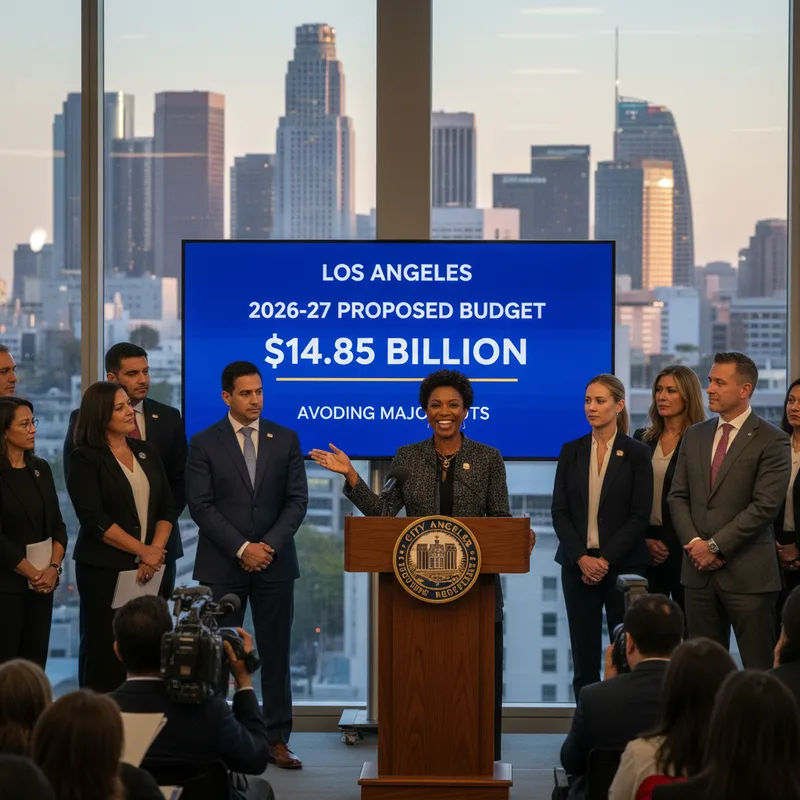
The budget also continues to support interim housing beds, street-level outreach services, and additional staff to administer housing programs funded by Measure ULA, the city's tax on high-value property sales.
Public safety remains a priority
The funding continues The Mayor's focus on law enforcement visibility, which has previously included a sweeping plan to cut road deaths ordering more police patrols in the San Fernando Valley.
The Los Angeles Fire Department’s budget would increase by about $41.8 million to $939.5 million, with the rise attributed almost entirely to higher sworn salaries. The spending plan includes $56.2 million for 43 replacement fleet vehicles, including four fire trucks, two aerial ladder trucks, three ambulances, and a new helicopter. Funding is also allocated for a new urban search and rescue vehicle.
When asked if the funding was sufficient for major emergencies, Bass said the department is “adequately funded” for incidents seen in the past. The budget also preserves funding for alternative public safety models, such as the city’s unarmed CIRCLE crisis response teams and the Gang Reduction and Youth Development program.
Critics say budget maintains a ‘status quo’
The proposal was met with criticism from some corners, including from opponents in the mayoral race. Councilmember Nithya Raman, who is challenging Bass, argued the budget fails to deliver needed change.
“The budget the Mayor released today tells us the plan is to largely keep doing what we’re doing. but what we’re doing is not working,” Raman said in a statement. “This budget maintains a status quo of reduced services and higher fees, the direct result of fiscally irresponsible decisions made by this Mayor in prior years.”
Mayoral candidate Adam Miller offered a similar critique. “Keeping the budget flat and our services flat implies that the status quo is working and we should continue with the status quo,” Miller said. “That is tone-deaf to the city of Los Angeles as Angelenos overwhelmingly feel we need change.”
Council review and next steps
Beyond the major priorities, the budget allocates funds for neighbourhood services, including repairs for 700 lane miles of streets, sidewalk repairs, and increased street sweeping and bulky-item pickups. It also supports a partnership with the Department of Water and Power to install up to 60,000 solar streetlights citywide, an initiative that will not draw from the general fund. Animal Services funding will remain steady, with no expected impact on shelter operations.
In a joint statement, Council President Marqueece Harris-Dawson and Budget Chair Katy Yaroslavsky acknowledged the work ahead. They noted the budget “prioritizes public safety, housing, and maintaining core city services, while acknowledging the difficult decisions ahead.” Zev Yaroslavsky, a former Los Angeles County Supervisor, commented that it appears to be a “much easier budget this year than it was last year,” partly due to tough decisions made previously. While local issues dominate the budget, other public safety concerns continue to make headlines, such as a recent case in Australia where five people were arrested over a violent kidnapping.
The proposed budget now moves to the Los Angeles City Council for several weeks of review, public hearings, and potential amendments. The council is expected to adopt a final version of the budget in June. More information on the city's budget process can be found on the City Administrative Officer's website. The new fiscal year commences on July 1.